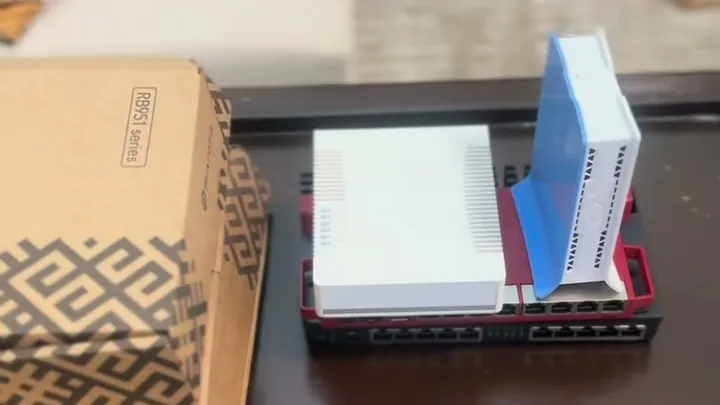
Hotspot Business Cost in Kenya: Can KSh 500 Work?
No. KSh 500 gets you the billing system, not the business. The real hotspot business cost in Kenya is about KSh 20,000 for the minimum kit: an internet connection of roughly 10 Mbps, a MikroTik hAP lite, a basic access point, cables and labour, and a small buffer for the things you forget. Here's the full list.
This is the starter list we send to everyone who comments "HELP" on our TikTok, with the price of each item and what it does.
The billing part is where Bitwave comes in: Bitwave hotspot billing has no setup fee and costs 3% of your monthly hotspot revenue, with a KSh 500 minimum. The rest of the money goes on hardware and internet.
How much does it cost to start a hotspot business in Kenya?
Starting a small hotspot business in Kenya costs about KSh 20,000. Around KSh 18,000 of that is a one-off spend on equipment, cabling and extras. The other KSh 2,000 is your first month of internet, which you pay again every month.
| Item | Cost (KSh) | Paid |
|---|---|---|
| Internet source (about 10 Mbps) | 2,000 | Every month |
| MikroTik hAP lite | 4,000 | Once |
| Access point (basic) | 5,000 | Once |
| Cables and labour | 5,000 | Once |
| Miscellaneous | 4,000 | Once |
| Minimum to start | About 20,000 |
These are working figures, not quotes. Prices change between shops and towns, so call two suppliers before you buy.
What does each item in the hotspot starter list do?
Each item does one job. The internet source brings the connection in, the MikroTik controls who gets online, and the access point spreads the signal to customers. Cables and labour join it all together. The miscellaneous budget catches whatever the site needs that you did not plan for.
- Internet source, KSh 2,000 a month. This is the bulk connection you resell, from a fibre or wireless provider in your area. About 10 Mbps is the floor for a first site. Ask the provider whether installation is charged separately.
- MikroTik hAP lite, KSh 4,000. The router that runs the hotspot. It shows customers the login page, applies each package's speed and time limits, and cuts users off when their package expires. It is the cheapest MikroTik that does the job.
- Access point, KSh 5,000. It carries the WiFi signal to where your customers are, such as a plot, a row of shops or a stage. It doesn't need to be a fancy one.
- Cables and labour, KSh 5,000. Ethernet cable, connectors and someone to run and mount everything neatly.
- Miscellaneous, KSh 4,000. Things that are easy to forget, for example extension sockets, clips, mounting brackets, transport and spare connectors.
Which costs are one-off and which are monthly?
Your equipment, cabling and extras are one-off costs of about KSh 18,000. The internet connection is a monthly cost of about KSh 2,000. Billing is also monthly: with Bitwave it is 3% of the month's hotspot revenue, or KSh 500 if 3% comes to less than that.
That KSh 500 minimum applies until your hotspot sells more than about KSh 16,700 a month, since 3% of KSh 16,700 is roughly KSh 500. A site selling KSh 30,000 a month would pay KSh 900. You can check other figures on the pricing page.
So plan for two numbers: about KSh 18,000 once, then about KSh 2,500 a month (internet plus the billing minimum) until revenue grows.
What should you buy first?
Buy in this order, and only spend on the next item once the previous one is sorted:
- Confirm internet at the exact site. If no provider can connect the building, the rest of the list is wasted money.
- Buy the MikroTik hAP lite. Everything else plugs into it.
- Set up billing and test. Bitwave configures the MikroTik for you at no charge, so you can buy a test package from your own phone before any customer does.
- Add the access point, cables and labour. Do this once you know where customers will sit and how far the signal has to reach.
Doing it in this order keeps your money in your pocket until each step works. If you're new to the whole setup, our guide on how to start a WiFi hotspot business in Kenya covers locations, package pricing and keeping the network up.
Where does the KSh 500 fit in?
KSh 500 is the minimum monthly charge for Bitwave hotspot billing. It doesn't buy hardware or internet. What it pays for is the system that turns your router into a business: the captive portal, M-Pesa payments that activate customers automatically, vouchers, and automatic disconnection when a package runs out.
Without a billing system, you would be checking M-Pesa messages and adding users by hand. That works for five customers and falls apart at fifty. When your hardware is ready, you can create a free Bitwave account and get the billing side set up while you finish the hardware.
FAQ
Can I start a hotspot business with less than KSh 20,000?
Not with KSh 500. About KSh 20,000 is the realistic minimum for a proper first site. Shopping around for the access point and cabling can bring the total down a little, but budget for the full list so the hotspot works reliably from day one.
Is the KSh 2,000 for internet a monthly cost?
Yes. The KSh 2,000 is what a connection of about 10 Mbps costs per month, so you pay it every month for as long as the hotspot runs. Everything else on the list, apart from billing, is a one-off cost.
Which MikroTik should I buy first?
Start with the MikroTik hAP lite at about KSh 4,000. It is the least expensive MikroTik that runs a hotspot properly. Move to a bigger MikroTik router only when your number of customers or your internet speed outgrows it.
Ready when your hardware is
Get the internet line and the hAP lite first, then let Bitwave handle billing and M-Pesa while you focus on finding customers. Questions about your own site? Comment "HELP" on our TikTok or reach us from the site, and we'll walk you through your list.
Running an internet business in Kenya?
Bitwave automates billing for 200+ ISP networks: M-Pesa payments, hotspot vouchers, PPPoE and MikroTik management in one dashboard.
Start free